As the literary historian Miklós Szabolcsi, Attila József’s monographer, wrote, “The poem A Breath of Air! [Levegőt!] was originally an ‘occasional poem’“. The occasion was the election of 1935, when Endre Bajcsy-Zsilinszky, the joint candidate of the opposition parties “was overthrown by open threats, the deployment of gendarmes and bribery in favour of the pro-government candidate.” The poet’s original intention was indeed to write an occasional poem, but it turned out to be something quite different—a universal exclamation, or as Szabolcsi puts it, an “ode to freedom.” The poet originally titled the poem “Rend és szabadság” [Order and Freedom], and only changed it to “A Breath of Air!” on the advice of the editor of the newspaper (8 Órai Újság [8 O’clock News]) that published it. Indeed, the poem makes many references to the immediate political context: the image of the “fragile villages” that “have fallen from the tree of living rights” is a reference to electoral fraud, but it also indicates the enormous differences in social and political opportunities between rural and urban areas. One of the important themes of the poem is the “filing” practice of the ruling party (Nemzeti Egység Pártja, Party of National Unity, NEP): the party collected data on voters and used it successfully during the elections. This practice was sharply criticized by several intellectuals at the time, for instance by the conservative, “bourgeois” writer, Sándor Márai who, very much like Attila József, described this practice as a threat. But the poem does not stop at topicality: its universal message, its categorical stand for freedom, is as intelligible today, in the age of surveillance capitalism and newer types of hybrid regimes, as it was at the time of its writing.
A Breath of Air!
Who can forbid my telling what hurt me
on the way home?
Soft darkness was just settling on the grass,
a velvet drizzle,
and under my feet the brittle leaves
tossed sleeplessly and moaned
like beaten children.
Stealthy shrubs were squatting in a circle
on the city’s outskirts.
The autumn wind cautiously stumbled among them.
The cool moist soil
looked with suspicion at streetlamps;
a wild duck woke clucking in a pond
as I walked by.
I was thinking, anyone could attack me
in that lonely place.
Suddenly a man appeared,
but walked on.
I watched him go. He could have robbed me,
since I wasn’t in the mood for self-defense.
I felt crippled.
They can tap all my telephone calls
(when, why, to whom.)
They have a file on my dreams and plans
and on those who read them.
And who knows when they’ll find
sufficient reason to dig up the files
that violate my rights.
In this country, fragile villages
– where my mother was born –
have fallen from the tree of living rights
like these leaves
and when a full-grown misery treads on them
a small noise reports their misfortune
as they’re crushed alive.
This is not the order I dreamed of. My soul
is not at home here
in a world where the insidious
vegetate easier,
among people who dread to choose
and tell lies with averted eyes
and feast when someone dies.
This is not how I imagined order.
Even though
I was beaten as a small child, mostly
for no reason,
I would have jumped at a single kind word.
I knew my mother and my kin were far,
these people were strangers.
Now I have grown up. There is more foreign
matter in my teeth,
more death in my heart. But I still have rights
until I fall apart
into dust and soul, and now that I’ve grown up
my skin is not so precious that I should put up
with the loss of my freedom.
My leader is in my heart. We are
men, not beasts,
we have minds. While our hearts ripen desires,
they cannot be kept in files.
Come, freedom! Give birth to a new order,
teach me with good words and let me play,
your beautiful serene son.
November 21, 1935
Translated from the Hungarian by John Bátki.
(Winter Night. Selected Poems of Attila József.
Oberlin College Press, 1997.)
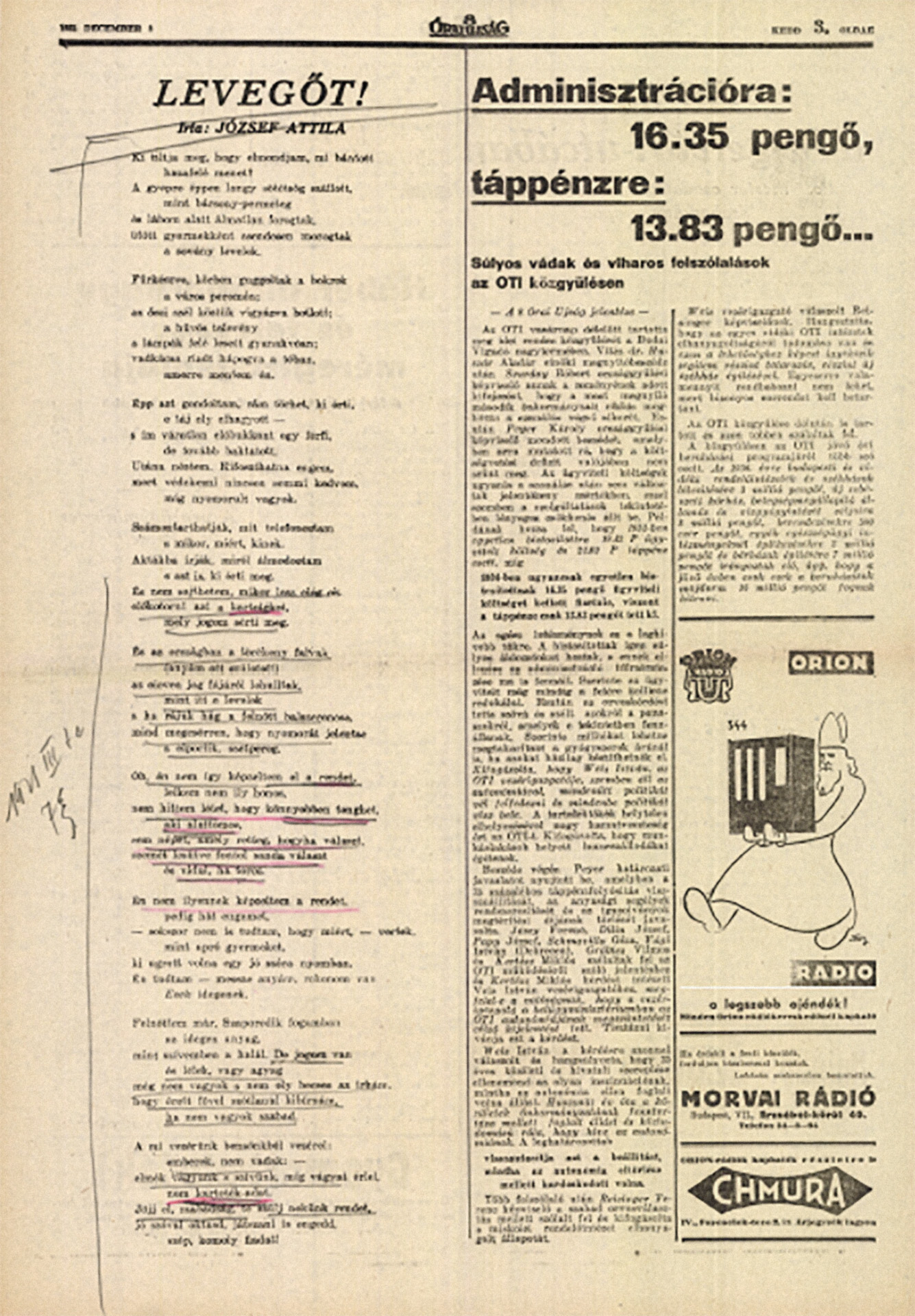
Attila József: A Breath of Air!, 1935
exhibition print
8 Órai Újság [8 O’clock News], December 3, 1935 / Arcanum
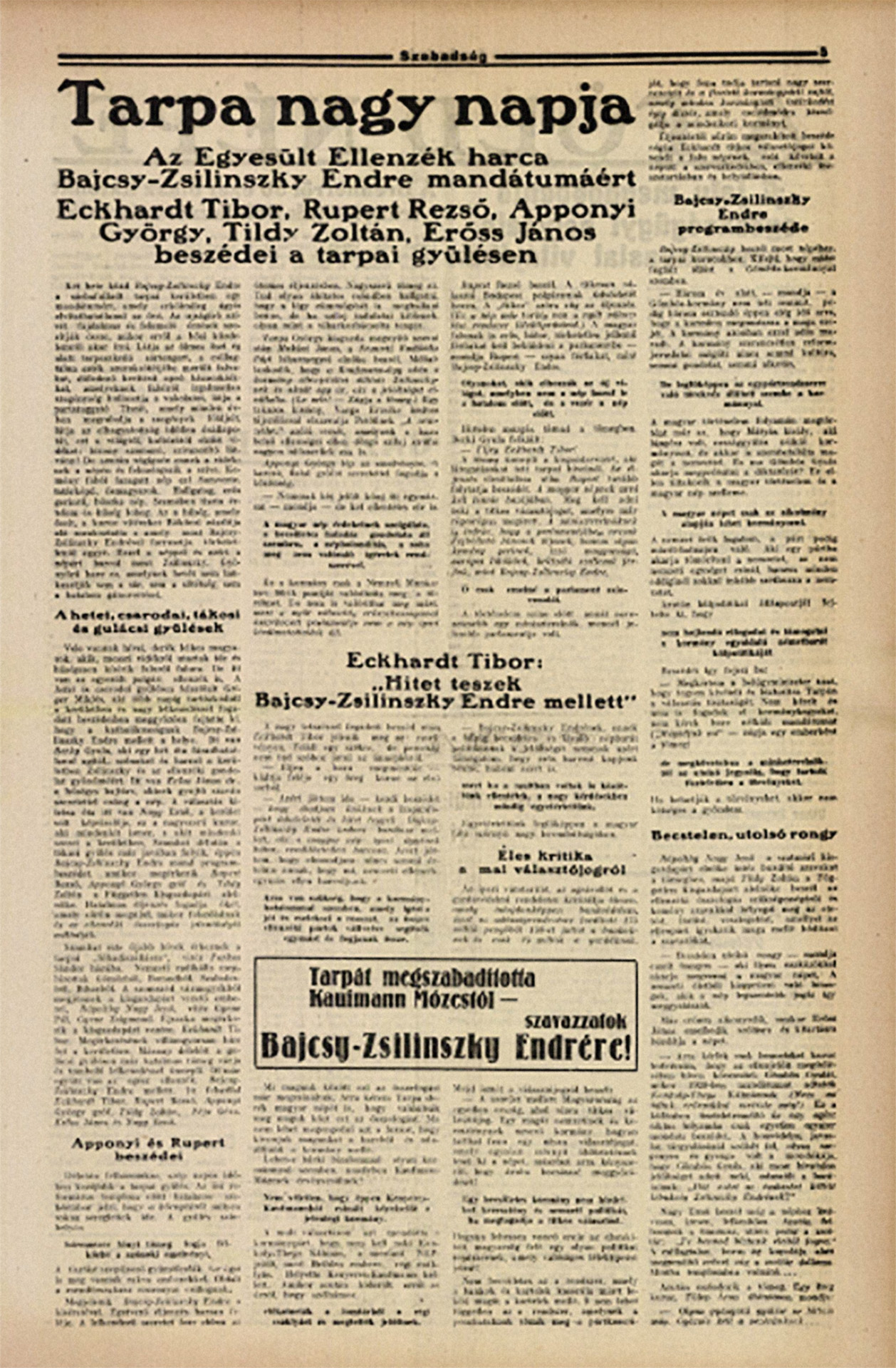
“Tarpa's big day. The United Opposition's fight for Endre Bajcsy-Zsilinszky's mandate.” Report of the weekly, Szabadság (which was edited by edited by Bajcsy-Zsilinszky himself) on the Tarpa election, December 8, 1935
kiállítási nyomat
Szabadság [Freedom], December 1, 1935/ Arcanum
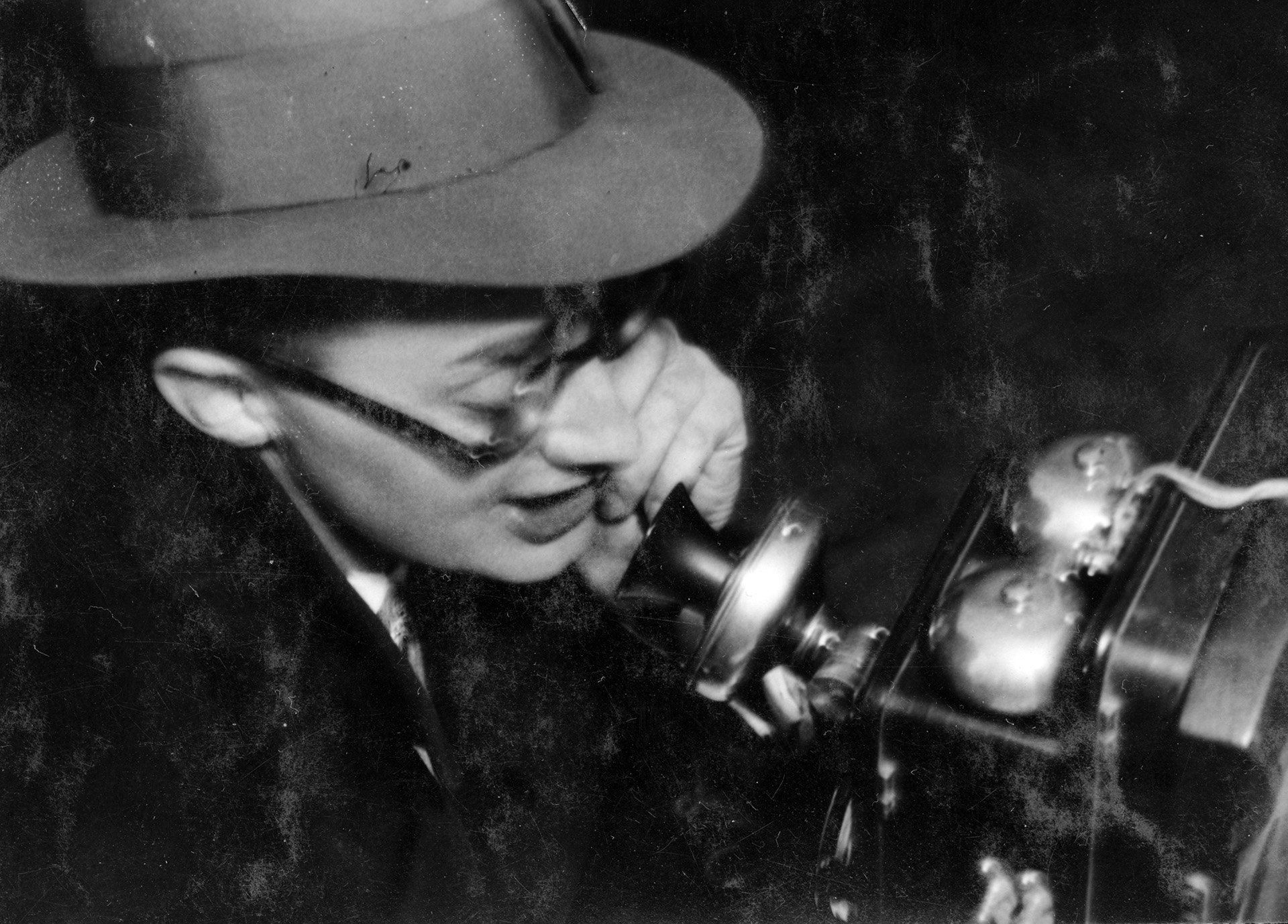
Man on the phone, 1935
bw. photo, exhibition print
Fortepan / Anna Kőszegi
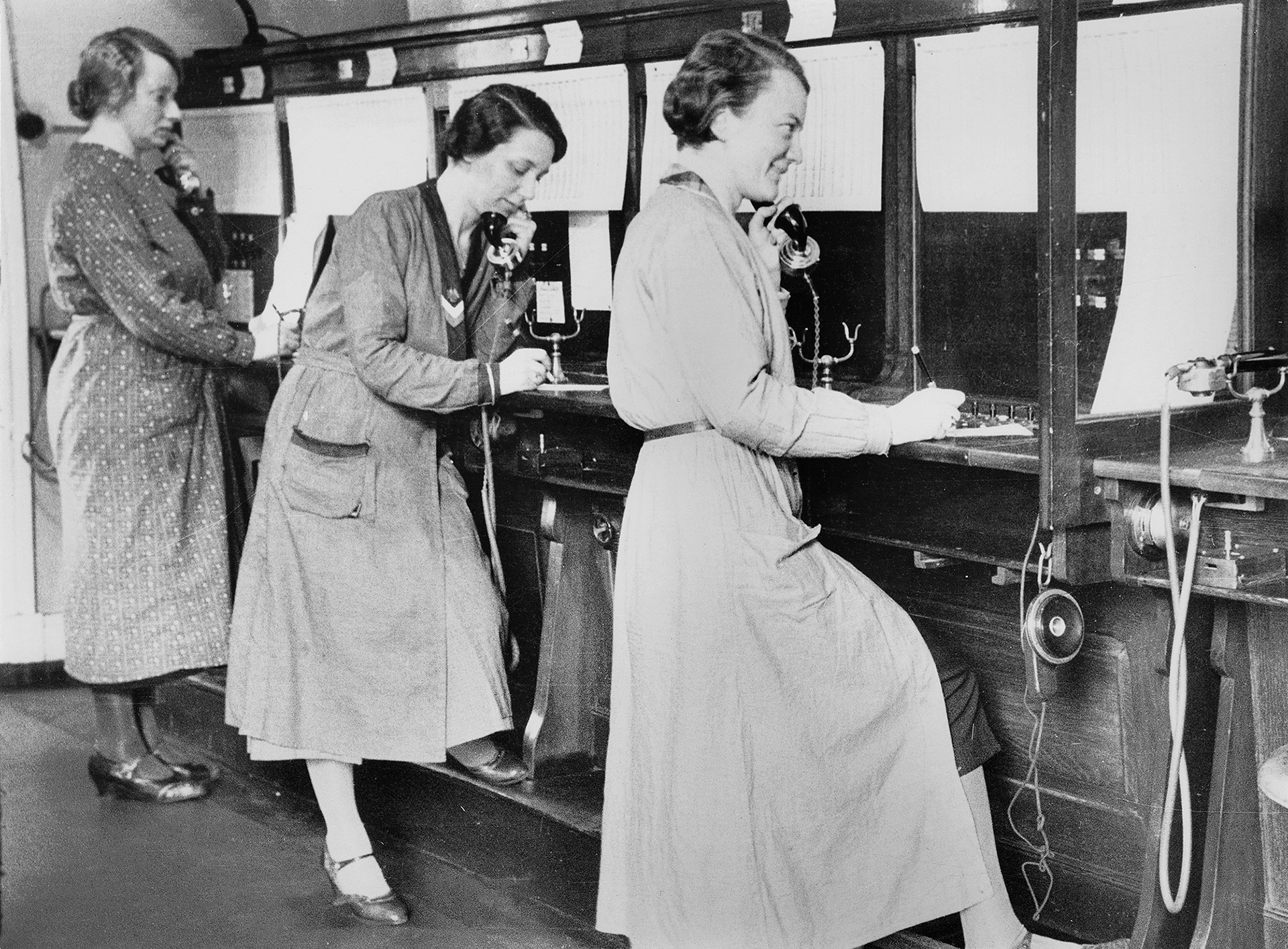
Germin (Gerd Mingram), Telephone operators in the telegraph office, 1935
bw. photo / exhibition print
© SLUB / Deutsche Fotothek / GERMIN